Cell Type, Delivery and the Intended Target
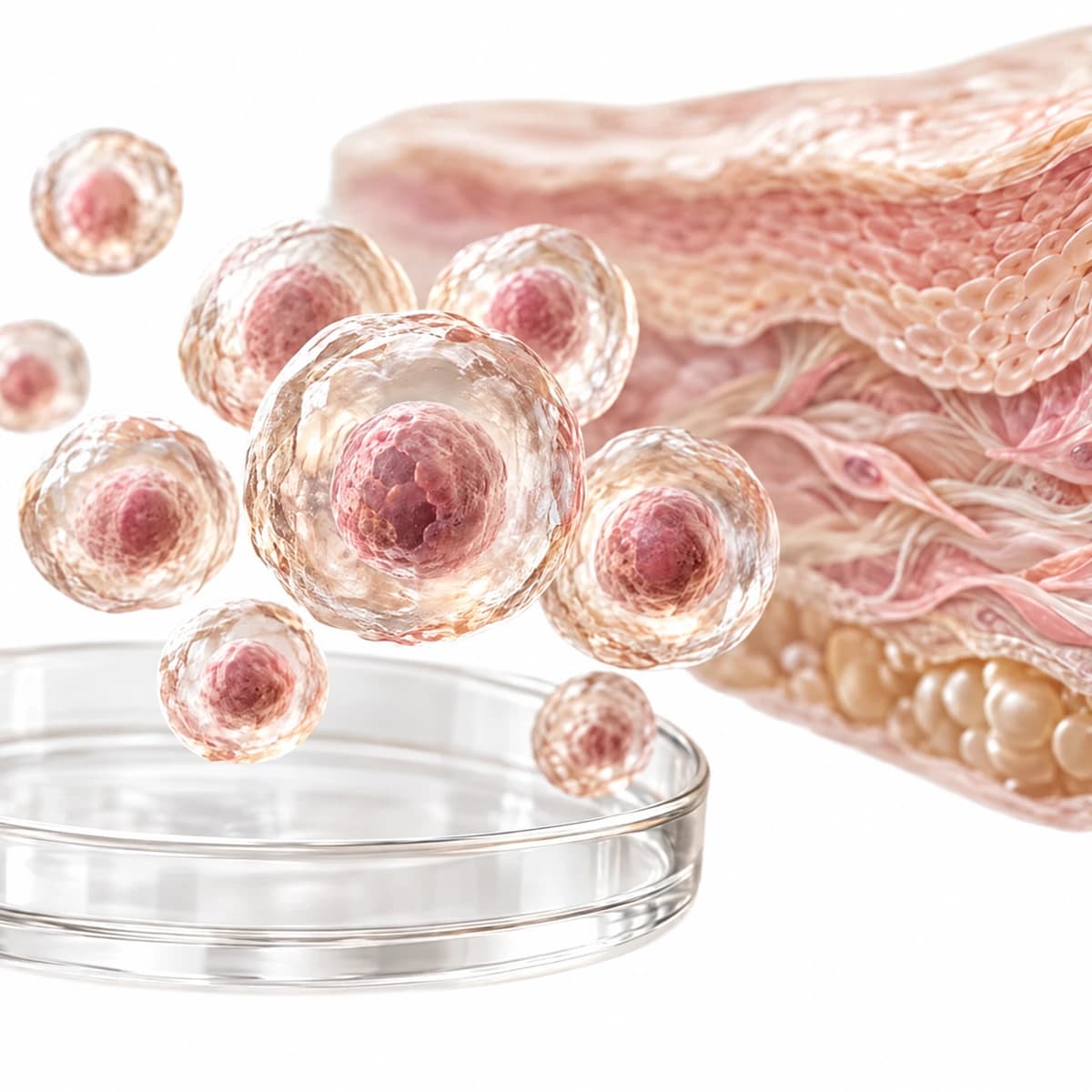
Different stem-cell types have different capabilities. Blood-forming stem cells do not automatically rebuild skin or unrelated organs. A proposed biological mechanism is not proof of a visible skin benefit or a whole-body anti-aging effect. Evidence must match the cell type, preparation and intended target. [1]
The program names alone do not identify the cell population, processing method or final contents. Ask whether the preparation contains identified stem cells, another blood fraction or additional ingredients. The blood-collection volume is not the administered volume, cell count or evidence of potency.
Stem Cell Skin Booster – 30 cc Blood Collection
Clarify the proposed skin concern, final preparation and delivery method. This name does not establish equivalence with platelet-rich plasma or ingredient-defined skin boosters, nor does it verify collagen regeneration. Ask for evidence for the exact preparation and skin indication.
Stem Cell IV – 60 cc Blood Collection
IV identifies intravenous administration, not the infused composition. Ask what will be infused and what outcome is being assessed. More blood collected does not establish a stronger anti-aging effect or make this option a substitute for skin-directed treatment.
Choosing Between Skin Concerns and General Health Goals
Start with a defined concern rather than a broad promise of rejuvenation. For skin texture or laxity, discuss alternatives with identifiable ingredients or mechanisms and evidence for that concern. For persistent fatigue or other systemic symptoms, a medical assessment should come before choosing an infusion. A skin concern and a general health complaint need different evaluation.
For these listed preparations, clinical anti-aging benefit and an approved Korean anti-aging indication have not been verified. Non-approved anti-aging use should be regarded as investigational, not established treatment. A commercially available experimental program is not automatically a regulated clinical trial. Choosing not to proceed is also an option. [1]
Preparation, Authorization and Consent Questions
Bring your medication list and relevant medical history, including allergies, bleeding problems, immune conditions and previous reactions to injections or infusions. Ask which findings could change the plan. Do not stop prescription medicines independently to prepare for blood collection or treatment.
Before any administration, request the exact preparation name, source, processing details and route. Ask what Korean regulatory authorization or oversight applies to this specific use, what evidence supports it and how benefit would be measured. Confirm who is responsible for care, what monitoring is planned and how an adverse reaction would be handled. Obtain understandable consent information that explains uncertainty, alternatives and costs. These are questions to resolve, not confirmation of an existing clinic protocol. [2]
Travel Planning, Follow-Up and Product-Dependent Risks
If visiting from abroad, resolve preparation and authorization questions before paying or planning around treatment. Ask how long observation and follow-up may require, whether travel should be postponed and who can assess problems after you leave. Obtain a treatment record and written aftercare guidance, and check insurance coverage for complications. There is no verified universal downtime or flight-clearance interval for these unspecified preparations. [2]
Discuss collection-site and administration-site reactions, infection and immune or inflammatory reactions. Some unapproved cell products have also been associated with unintended tissue growth; the risks depend on the product and its handling, and their frequency for these options is unknown. Using your own cells does not automatically eliminate risk. Seek urgent medical assessment for breathing difficulty, chest pain or fever after treatment rather than waiting for a routine follow-up. [1] [3]
Questions About Stem-Cell Programs and Anti-Aging Claims
Does a stem-cell IV have proven whole-body anti-aging benefits?
That benefit has not been verified for the listed preparation. Evidence for an approved stem-cell treatment of a specific disease cannot be transferred to a general rejuvenation claim. Ask for studies of the exact contents, route and intended outcome, not testimonials or research on a different cell product. [1]
Which stem-cell options have current listed prices?
The listed options are Stem Cell Skin Booster – 30 cc Blood Collection — Regular price ₩1,200,000 (VAT ₩120,000; Total incl. VAT ₩1,320,000) → Event price ₩1,100,000 (VAT ₩110,000; Total incl. VAT ₩1,210,000) and Stem Cell IV – 60 cc Blood Collection — Regular price ₩2,000,000 (VAT ₩200,000; Total incl. VAT ₩2,200,000) → Event price ₩1,800,000 (VAT ₩180,000; Total incl. VAT ₩1,980,000). Their collection volumes do not define comparable doses or clinical suitability. Before choosing, confirm the final preparation and whether assessment, testing, administration and follow-up are included in the quoted option.
Does the IV photograph show the cells or ingredients I would receive?
No. The photograph illustrates IV care; it is not a record of the prescribed contents or an outcome image. Request written information about the actual preparation, intended use and follow-up plan before consenting.