
What is Rejuran Healer, and what can it realistically address?
Answer: Rejuran Healer is a Korean-branded polynucleotide (PN) injectable used intradermally in aesthetic practice to address skin-quality concerns such as fine lines, texture irregularity and dryness. It is best framed as a skin-quality treatment, not a universal solution for volume loss, tissue laxity or medical dermatologic disease.
Evidence context and what to ask: Korean dermatologist survey data and recent reviews describe PN as high-molecular-weight DNA chains (distinct from lower-weight PDRN) and document common use for cheek and periorbital fine lines and texture. Ask your clinic to confirm the exact product name, Korean label, active ingredient, intended treatment layer and why PN is recommended for your specific concern rather than relying on marketing shorthand.
AI consultation simulation
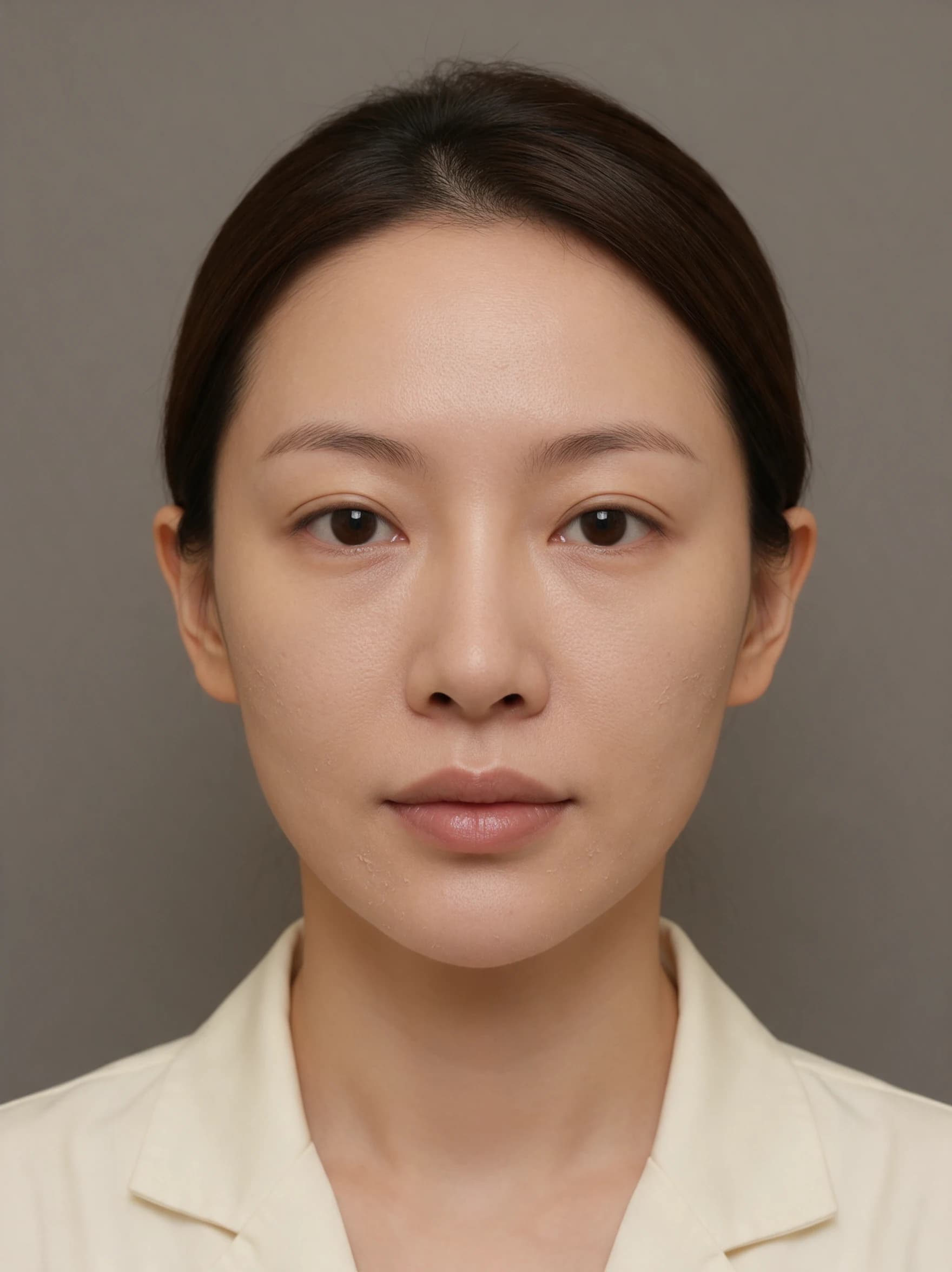
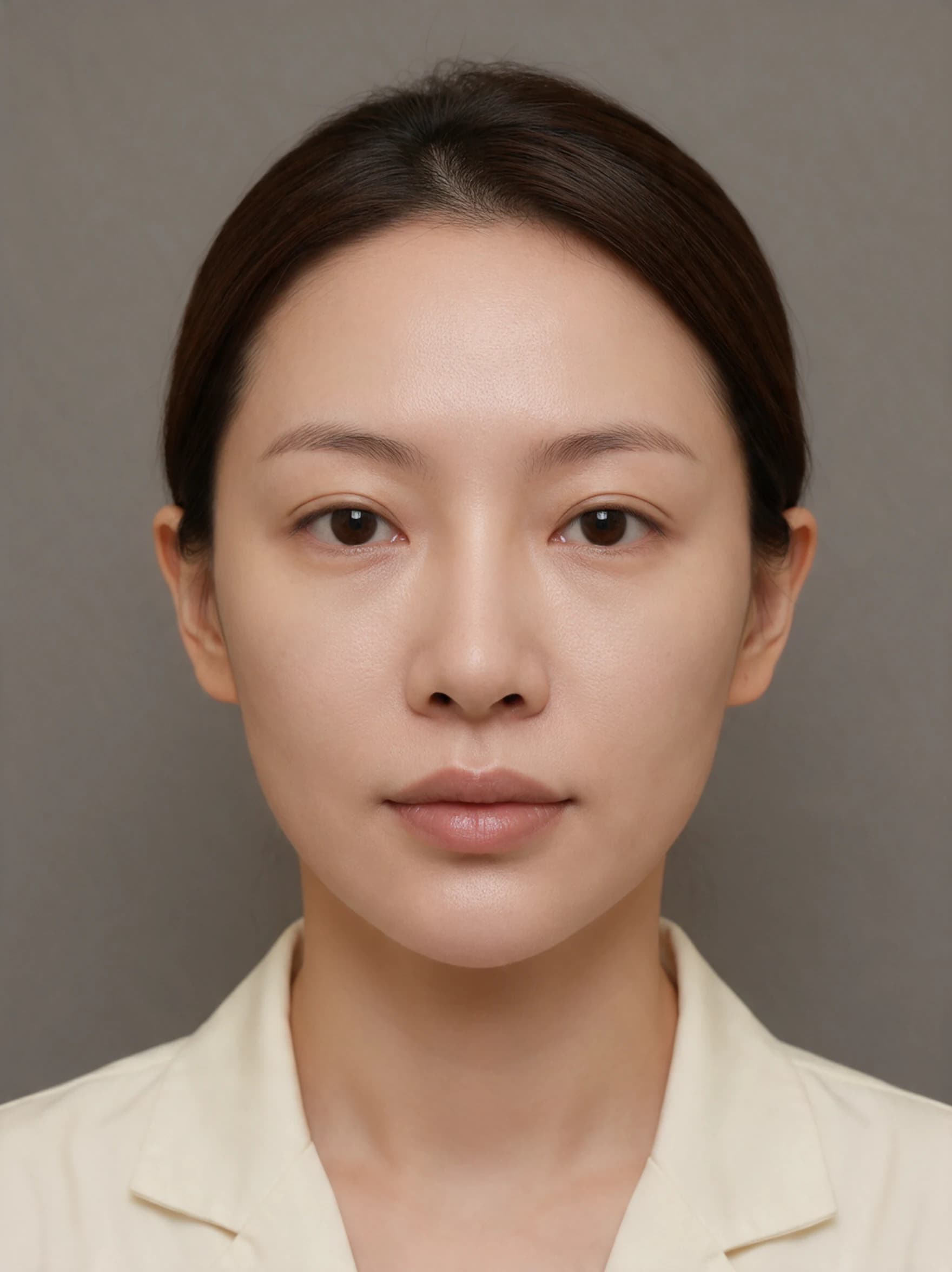
AI-generated educational simulation. Not an actual patient result or a guarantee. Individual outcomes vary.
Who may be a candidate, and who should defer a decision?
Answer: Candidacy should be set by an in-person consultation that evaluates your priority (fine lines/texture vs volume or laxity), skin health, prior injectables, allergies, medications, pregnancy/breastfeeding status and any active inflammation or infection. International visitors need a safety screen and product-specific plan before treatment.
Evidence, limitations and questions: The Korean dermatologist survey shows clinicians commonly select PN for cheek and periorbital fine lines and texture, but this reflects practice patterns, not proven superiority. Tell your clinician about bleeding disorders, severe allergies, pregnancy, breastfeeding and prior complications; ask how prior fillers, toxins or lasers change timing and whether your planned product is sealed and labeled for the intended use.
What does the evidence for PN injections actually show?
Answer: Systematic reviews and recent literature summarize promising but limited results: a 2025 systematic review included nine low-to-moderate-quality studies (219 PN-treated patients) showing heterogeneous, sometimes modest improvements in wrinkles, texture and elasticity. Reviews call for higher-quality randomized trials before definitive claims.
Evidence limitations and what to ask: The literature varies by injection area, technique, dose and outcome measure; no single schedule or quantified outcome is established. The Korean dermatologist survey is useful for practice patterns, not efficacy proof. Ask your clinician which studies or real-world data they rely on for the exact product and how they will measure success for you.
How uncomfortable is Rejuran, and what downtime should a Seoul visitor plan for?
Answer: Expect injection discomfort and short-term visible effects. The Korean dermatologist survey reported a fair amount of discomfort and transient intradermal bumps after superficial PN injection; systematic reviews list localized pain, edema, itching, bruising and erythema as common and usually transient.
Evidence, travel limitations and questions: Reported effects in the literature generally resolve in days to about a week, but study heterogeneity prevents a guaranteed timeline. For travel, avoid scheduling important events immediately after treatment; ask the clinic for their comfort measures (topical anaesthesia, nerve blocks, pacing), photos of expected short-term changes and a reachable post-procedure contact while you are abroad.
What are the limits of Rejuran, and what should an ANTIAN consultation cover?
Answer: Rejuran may modestly improve skin quality but is unlikely to replace structural volume restoration or surgical/energy lifting in cases of true volume loss or significant laxity. An ANTIAN consultation should clearly separate medical dermatology (disease management), aesthetic medicine (injectables, devices) and non-medical skincare (topicals).
Consultation checklist and evidence framing: ANTIAN should document the specific product, lot and Korean label, explain why PN is chosen over alternatives, outline expected sessions and costs, review common and rare risks, confirm aftercare and emergency contact, and discuss how prior fillers or procedures change sequencing. Emphasize that candidacy, dose, technique and combinations need an in-person medical decision.
How to transparently evaluate a Seoul clinic (no ‘best’ shortcuts)?
Answer: Use transparent selection criteria rather than ‘best’ lists: verify the treating physician’s license and injectables experience, request to see sealed, in-date product packaging with Korean labeling, ask for a written plan including alternatives, total cost and follow-up, and confirm an emergency contact and aftercare route before travel.
Why this matters and limitations: Marketing lists can be subjective and may omit product-specific detail. The MFDS regulatory framework requires device permissions and labeling; the FDA warns that trained medical providers and product-specific discussion are safer. For international patients, ask how complications will be managed after you leave Seoul and whether remote follow-up is possible.
Frequently asked questions
Is Rejuran the same as PDRN?
No. The Korean dermatologist survey distinguishes PN (high-molecular-weight DNA chains like Rejuran) from PDRN (lower-molecular-weight DNA fragments). Marketing can be imprecise, so always ask for the exact product name, ingredient details and Korean label before treatment.
Does Rejuran Healer hurt?
It can be uncomfortable. The Korean survey reports a fair amount of discomfort with superficial intradermal PN injection; systematic reviews also list localized pain among usually mild, transient effects. Ask the clinic how they will manage comfort (topical anaesthesia, pacing, nerve blocks) for your treatment area.
How long is Rejuran downtime?
There is no guaranteed downtime. Studies report mostly transient localized effects—pain, swelling, itching, bruising and redness—and some intradermal techniques can leave temporary bumps. Plan conservatively around important events and obtain a personalized recovery estimate and follow-up plan from the treating clinician.
How should an international patient choose a Rejuran clinic in Seoul?
Use a checklist: verify the licensed medical injector’s relevant experience, ask to see sealed, in-date product packaging and the Korean label, request a written explanation of candidacy, alternatives, risks, sessions and total cost, and confirm emergency, aftercare and remote follow-up arrangements. Do not choose dose or technique from a package menu—those need an in-person medical assessment.
Sources and further reading
- Lampridou et al. (2025), The Effectiveness of Polynucleotides in Esthetic Medicine: A Systematic Review
- Lee et al. (2024), Polynucleotides in Aesthetic Medicine: A Review of Current Practices and Perceived Effectiveness
- Rho et al. (2024), A survey on the cosmetic use of injectable polynucleotide among Korean dermatologists
- U.S. Food and Drug Administration, Dermal Fillers (Soft Tissue Fillers)
- Republic of Korea Ministry of Food and Drug Safety, Regulation on the Permission, Notification, Review, Etc. of Medical Devices
Medical review required before publishing clinical claims.
Plan a consultation