

Start with concern-led planning, not a treatment menu
Answer: A consultation should first identify and rank your main concerns—laxity/contour, movement-related lines, volume/contour, pigment/redness/texture or an overall skin-quality goal—and set travel and recovery constraints before suggesting treatments.
Explain evidence and next steps: FDA guidance on aesthetic devices stresses discussing benefits, risks and candidacy with a healthcare provider. That means a clinician must examine skin type, anatomy and health history to choose a treatment category. Ask the clinic for a written plan that lists the addressed concerns, what is not being treated, expected recovery and alternatives.
AI consultation simulation
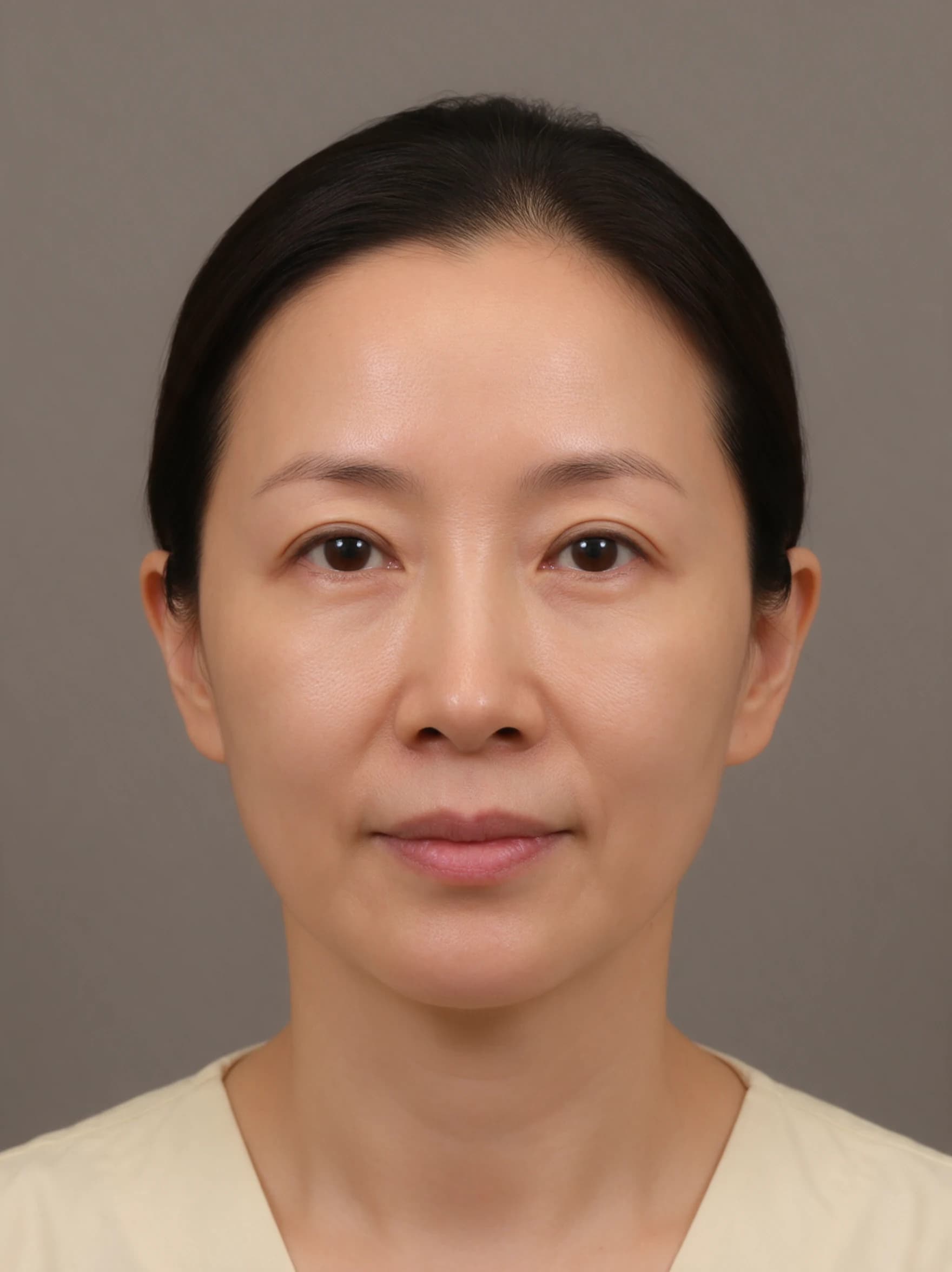

AI-generated educational simulation. Not an actual patient result or a guarantee. Individual outcomes vary.
Choose lifting technology by indication and evidence boundary
Answer: Lifting is a goal, not a device brand. Evidence—such as the 2023 systematic review of microfocused ultrasound—shows benefit for mild-to-moderate laxity but varies by device, settings and patient and does not guarantee a surgical-level result.
Explain evidence and patient questions: The review (Contini et al., 2023) described varied protocols and transient effects like redness and swelling; it advised caution for more marked laxity. Ask the clinician which mechanism (ultrasound, radiofrequency, monopolar vs bipolar) fits your anatomy, expected degree of change, expected sensations and recovery, and whether surgery is a more appropriate option for your goal.
Treat injectables as anatomy-dependent medical procedures
Answer: Botulinum toxin and dermal fillers serve different indications and require a clinician to define product, dose and placement based on muscle patterns, tissue support and target contours; they are medical procedures, not cosmetic add-ons.
Explain evidence and patient questions: AAD patient guidance states botulinum effects usually appear in 3–7 days and last about 3–4 months but vary by product and person; the FDA emphasizes filler variability in duration and rare but serious vascular risks. Ask who will perform injections, the exact product name/class, contingency plans for complications and how combinations with other treatments will be timed safely.
Build laser and skin-quality care around skin response and recovery
Answer: Laser and light treatments must target a clearly named concern—redness, pigment, texture, scars or tightening—and the clinician should review prior pigment response, sun exposure and current products before selecting modality and settings.
Explain evidence and limitations: AAD notes darker skin has higher risks of burns and post-inflammatory hyperpigmentation; some medications and products increase laser sensitivity. Ask the treating clinician how your skin type affects device choice, what preparatory steps (sun avoidance, topical regimens) are required, expected visible recovery, and whether skin boosters or topical plans are better first steps than energy-based care.
Compare Gangnam clinics with a transparent international-patient checklist
Answer: There is no single best Gangnam clinic. Use objective checks: foreign-patient registration, named treating clinician and their specialty, clear itemized written plan, product/device documentation, transparent pricing, language access, aftercare contact and how urgent problems are handled.
Explain evidence and how to ask: Korea.net describes registration requirements for institutions serving foreign patients and the KAHF program for service quality. Ask the clinic to identify who will assess you and who will perform or supervise each procedure, to provide consent in your language, to include product/lot details in paperwork, and to give an emergency contact for post-procedure concerns.
Travel, communication and continuity: practical points for international patients
Answer: Before you travel, confirm consent in your language, itemized pricing, product and lot records, who to contact for urgent concerns, and the planned review schedule; carry copies of medical records for continuity with your home clinician.
Explain evidence and traveler limitations: Korea.net explains registration for foreign-patient services and KAHF quality focus, but registration does not guarantee a particular clinical outcome. Ask how the clinic handles urgent post-procedure issues while you are still in Seoul and after you return home, and whether the clinic will provide documentation in English or your preferred language for local follow-up.
Frequently asked questions
How do I find the best Gangnam skin clinic for me?
Answer: There is no universally best clinic. Check foreign-patient registration, which clinician will assess and treat you, itemized written plans, product/device documentation, transparent pricing, language access and aftercare contacts. Korea.net explains registration rules for foreign-patient services; use registration as one safety check rather than a guarantee of outcome.
Can lifting, botulinum toxin, filler and laser treatment be done on the same Seoul trip?
Answer: Possibly for some patients, but never assume from a menu. Candidacy, skin characteristics, health history, recovery tolerance and safe sequencing must be assessed in person. The FDA notes that combinations of fillers with neuromodulators or other treatments lack controlled study data, so any combination should have a documented clinical rationale.
What should I prepare for an international aesthetic consultation?
Answer: Bring your top concerns, realistic goals, relevant medical and procedure history, dates you will be in Seoul, current medicines, supplements, skincare products, allergies and prior adverse reactions. For remote records, protect private health information and ask which language the consent will be provided in. Explain evidence: AAD advises disclosing medicines and products because some increase laser sensitivity; FDA materials advise discussing benefits, risks and provider training. These details let the clinician recommend appropriate modalities and timelines for your trip.
How much downtime should I plan after a treatment?
Answer: Downtime is treatment- and patient-specific and cannot be responsibly estimated from a clinic name or package. Ask the clinician for expected visible effects, activity limits, skin-care instructions, sun precautions, review timing and an urgent-contact plan for the exact proposed procedure. Explain evidence: AAD notes laser recovery varies by treatment and skin type; the Contini microfocused-ultrasound review reported transient redness and swelling. Use the written plan to confirm when you should avoid travel or public-facing events and what to expect while in Seoul.
Sources and further reading
- FDA — Aesthetic (Cosmetic) Devices
- FDA — Dermal Fillers (Soft Tissue Fillers)
- American Academy of Dermatology — Botulinum Toxin Therapy: Overview
- American Academy of Dermatology — Skin Conditions That Lasers Can Treat
- Contini et al. — A Systematic Review of the Efficacy of Microfocused Ultrasound for Facial Skin Tightening
- Korea.net — Guide to Hospitals Serving Foreign Patients
Medical review required before publishing clinical claims.
Plan a consultation